

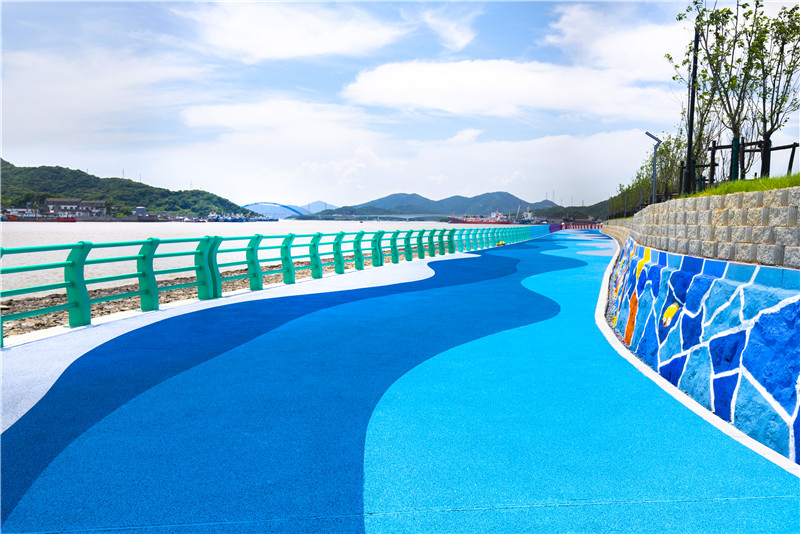


Pavement Materials Compared: Advantages & Applications
Whether you're paving a driveway, garden path, park trail, or commercial plaza, choosing the right surface material is crucial. This article explores five popular pavement materials—Stamped Concrete, Cold Mix Asphalt, Gravel Concrete, Permeable Concrete, and Resin Bound Gravel—their characteristics, advantages, and best use cases.
1. Stamped Concrete
Stamped Concrete (also called imprinted concrete) uses molds to press brick, wood, or stone textures into freshly poured concrete surfaces. It is monolithic—poured and finished in a single operation.
Advantages
Applications
Plazas, parking lots, sidewalks, pedestrian streets, parks, residential communities, villa courtyards, commercial spaces, industrial facilities, landscape projects.

2. Cold Mix Asphalt
Cold Mix Asphalt is an eco-friendly pavement material that requires no heating—it can be mixed and laid at ambient temperature.
Advantages
Applications
Highway maintenance, municipal roads, industrial park roads, rural roads, pothole patching, temporary roadways.

3. Gravel Concrete
Gravel Concrete uses natural gravel (river gravel) as coarse aggregate. Its rounded shape and high strength provide both structural integrity and decorative appeal.
Advantages
Applications
Structural building components, public building facades, landscape paving, sidewalks, plazas, residential decoration.

4. Permeable Concrete
Permeable Concrete (porous concrete) is a lightweight concrete with no fine aggregates and a network of interconnected voids that allows water to drain naturally through the surface.
Advantages

5. Resin Bound Gravel
Resin Bound Gravel mixes natural decorative stones (marble, granite, quartz) with high-performance resin binders. Every stone is fully encapsulated by the resin.
Advantages
Applications
Driveways, walkways, garden paths, commercial plazas, patios, heritage sites, landscape projects

Selection Guide